Omorphia
ομορφιά (beauty)
“The form of an object is a ‘diagram of forces.’”
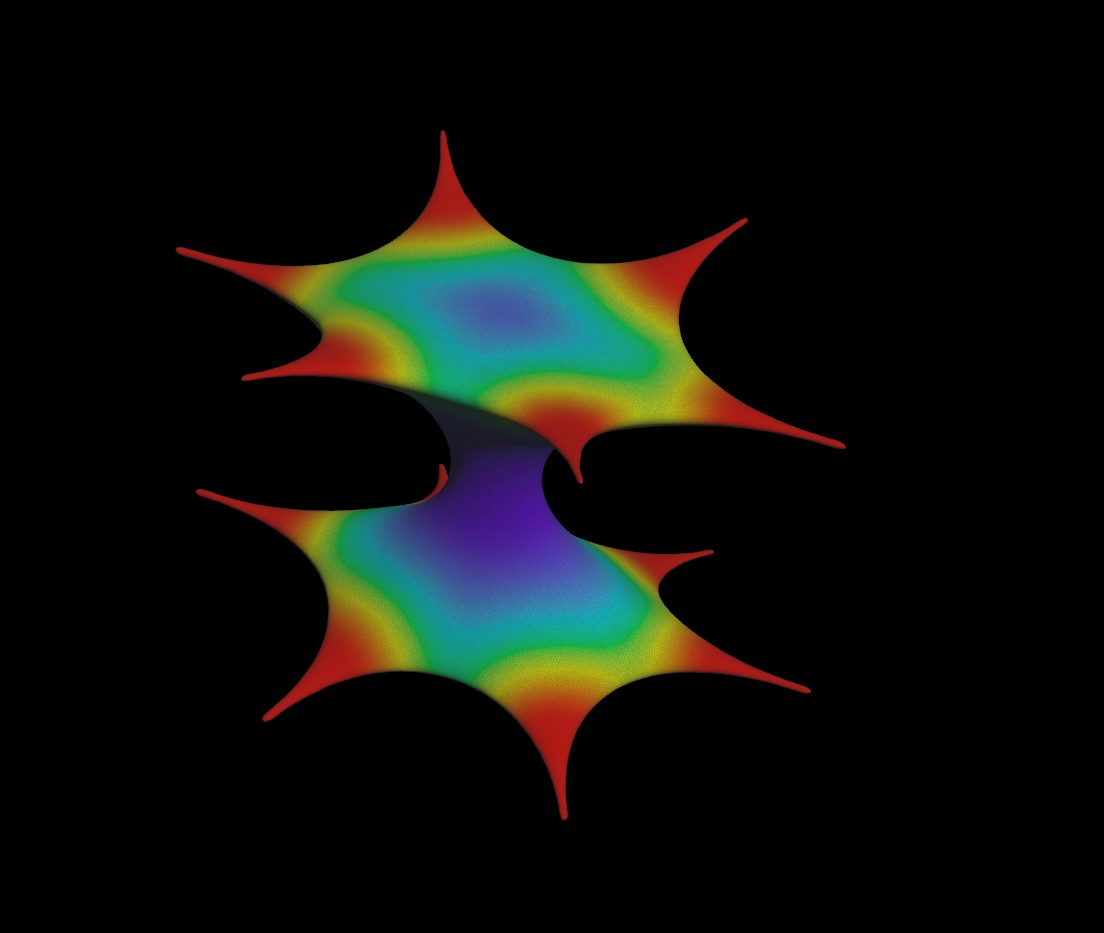
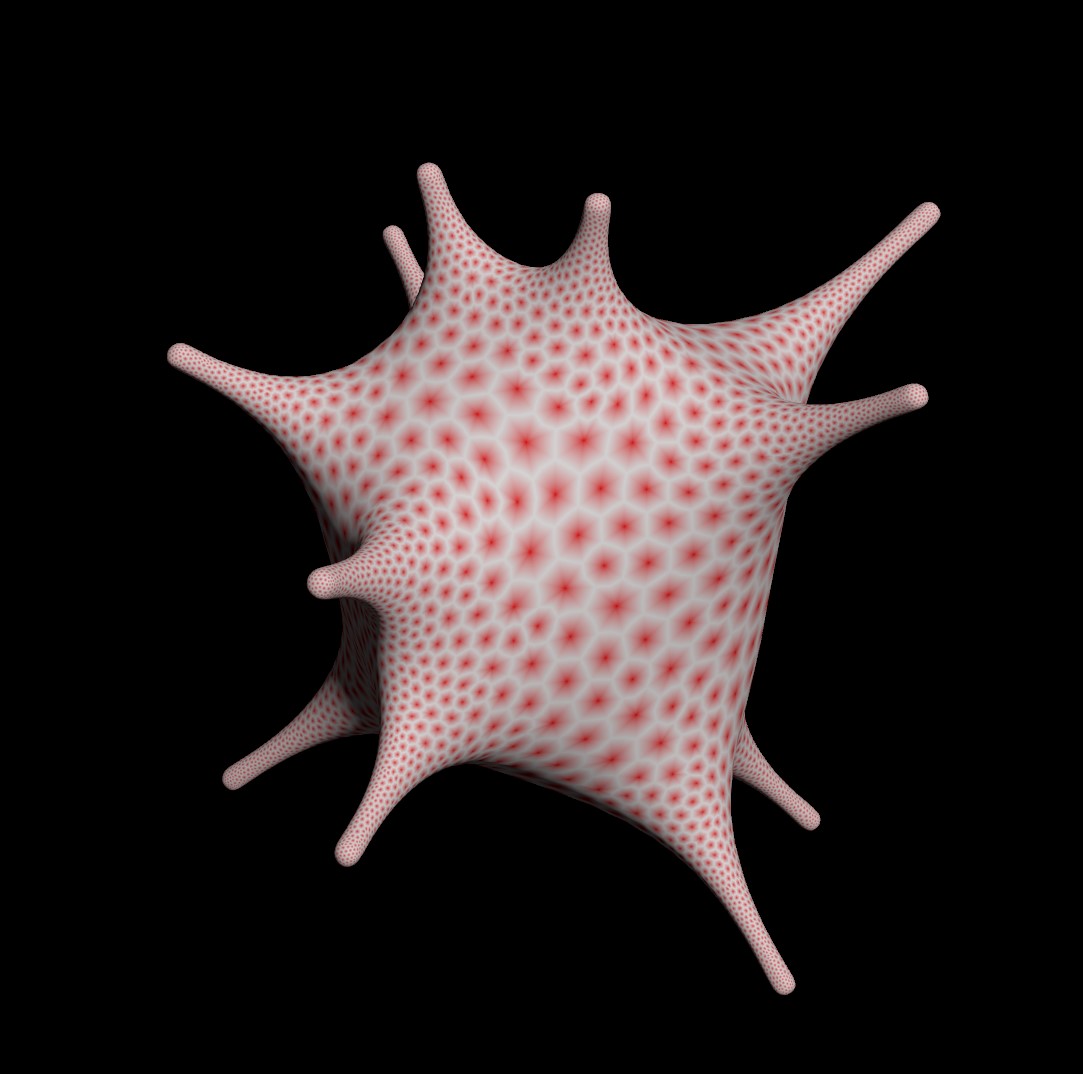
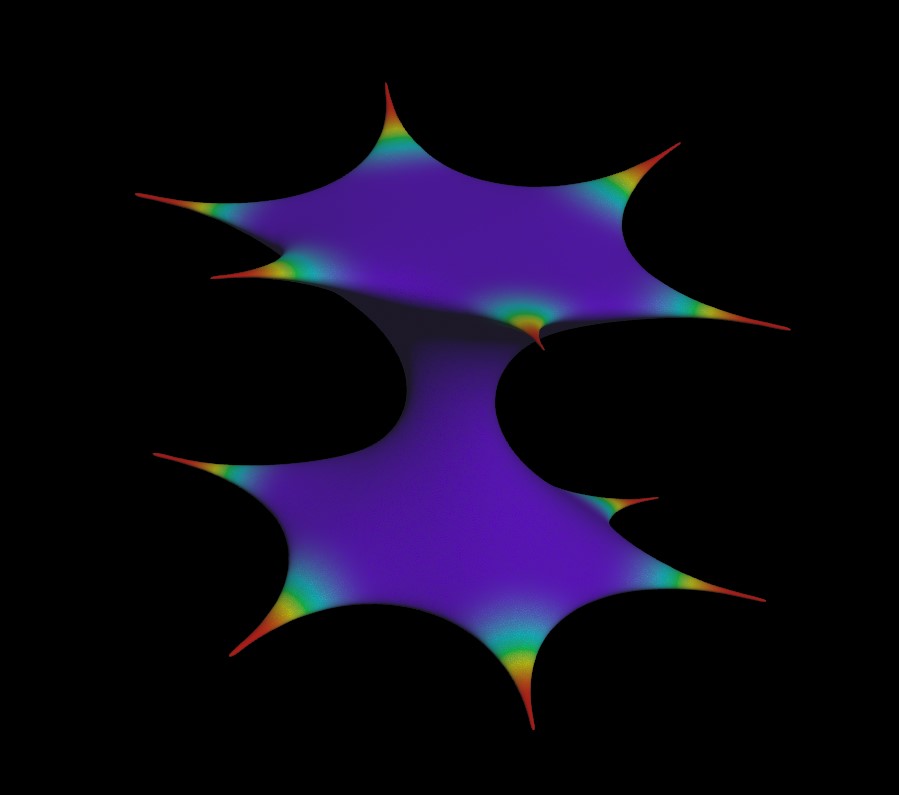
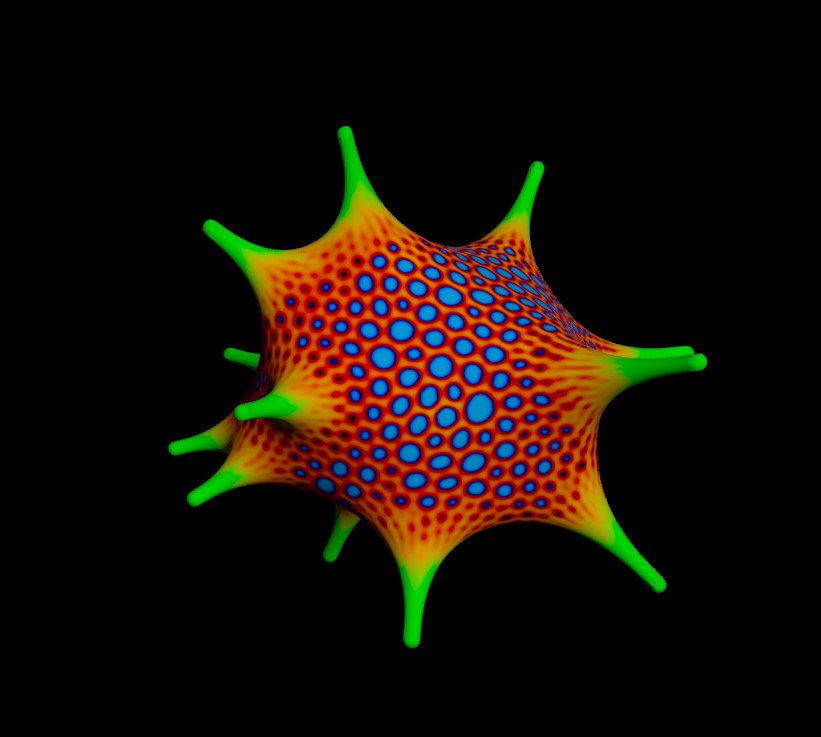
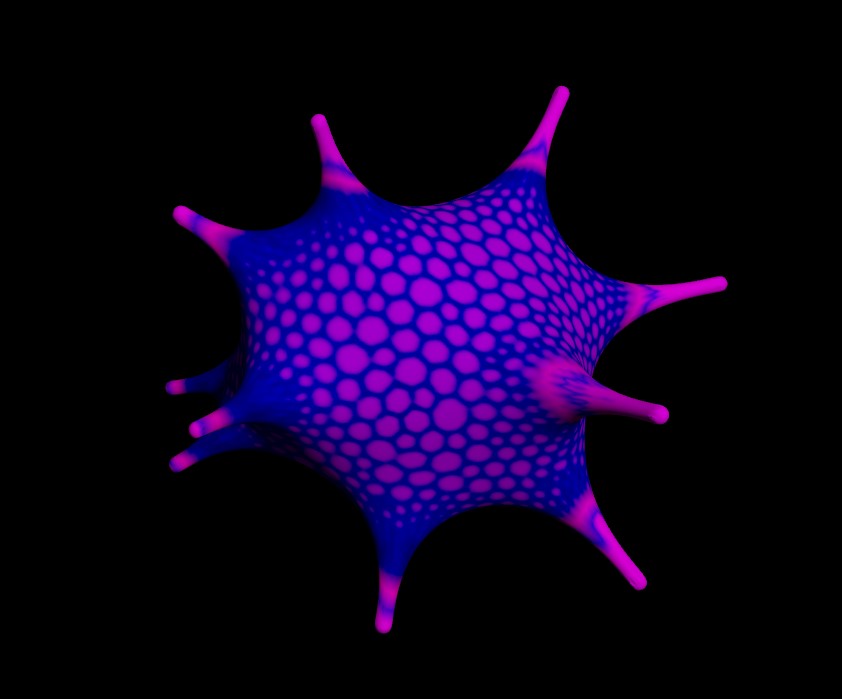
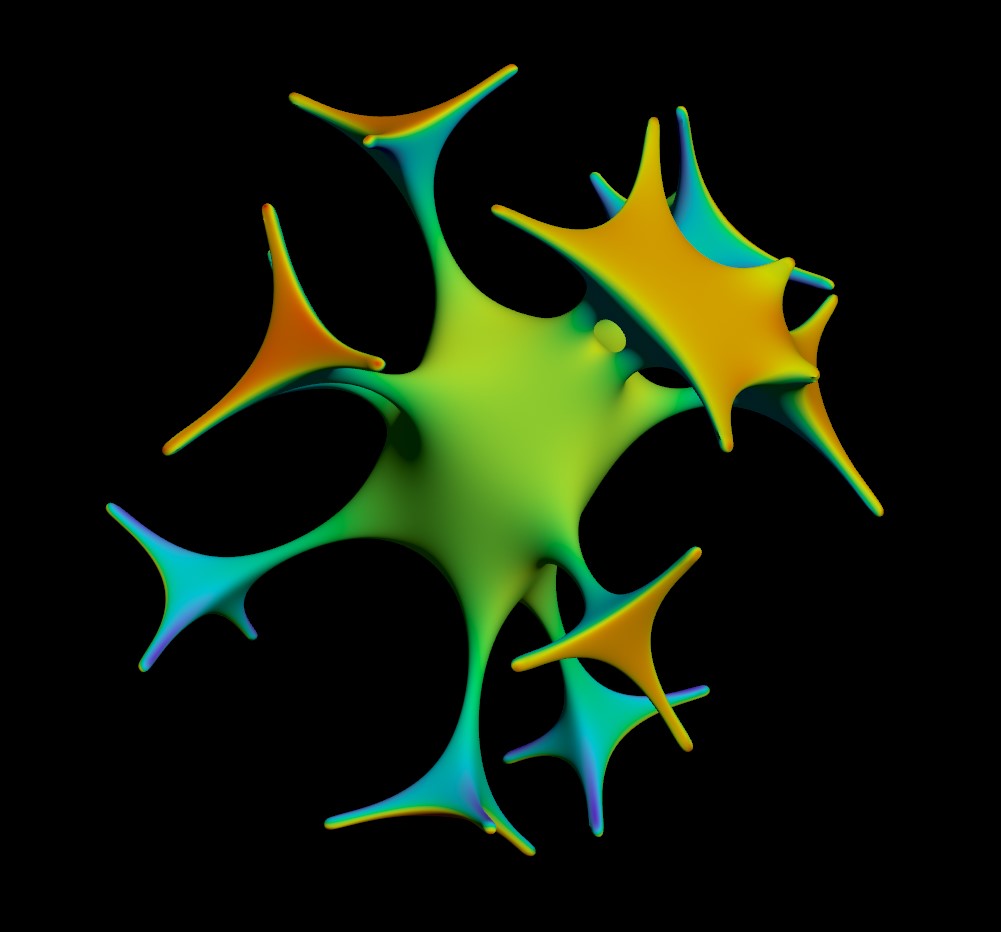
We use simulation to stretch tension membranes between anchors and let them settle into equilibrium, approaching the minimal surface that spans those anchors.
Originally, I made these forms by stretching fabric within wooden frames. I could hook the fabric and pull it in various ways to inflate the form. I devised ways to sew various patterns resulting in different topologies and combine parts to make more complex forms. Hardened with epoxy or polyester resin they could be released from the frame and painted.
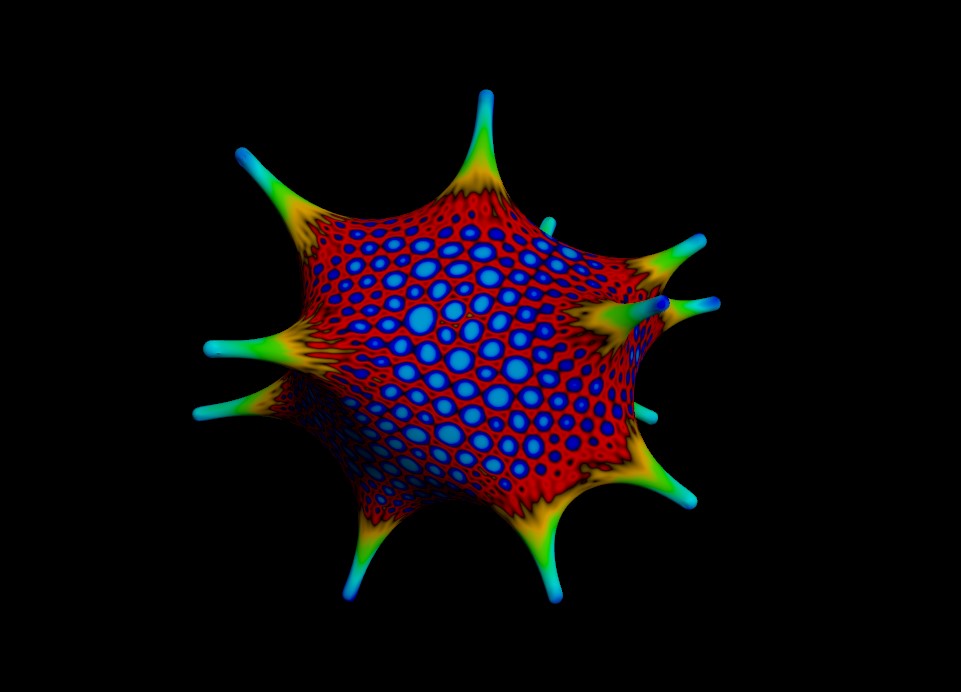
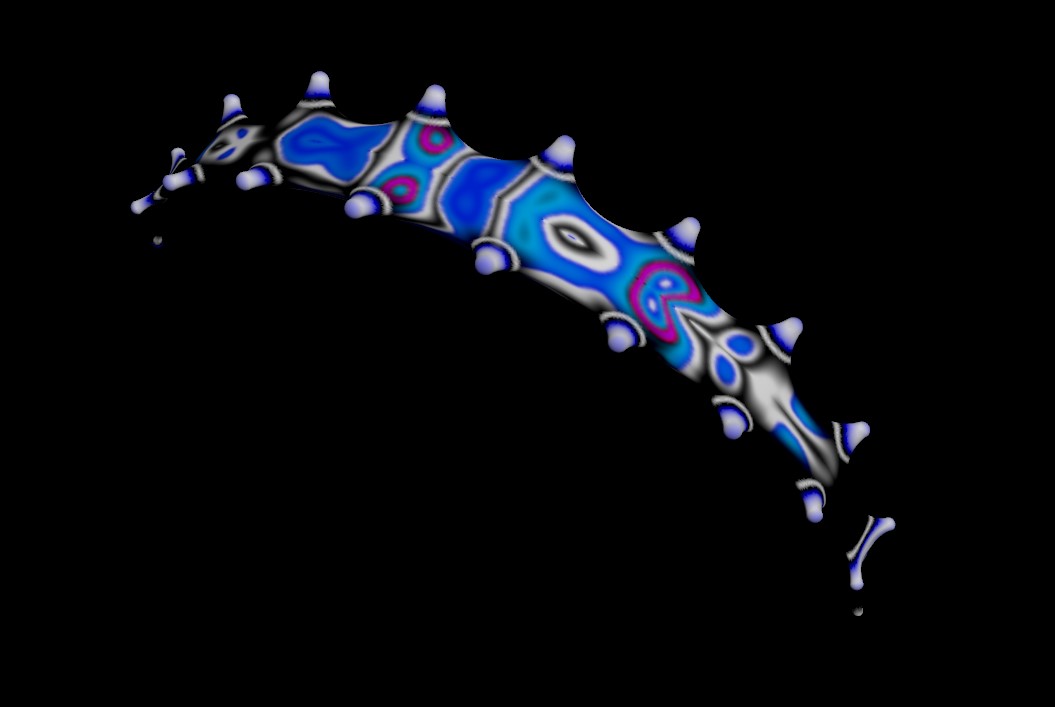
Here the forms are created through procedural modeling and simulation. Color and pattern are drawn from the intrinsic properties of the forms themselves, from the curve and tension of a surface to the way it stretches between the anchors.
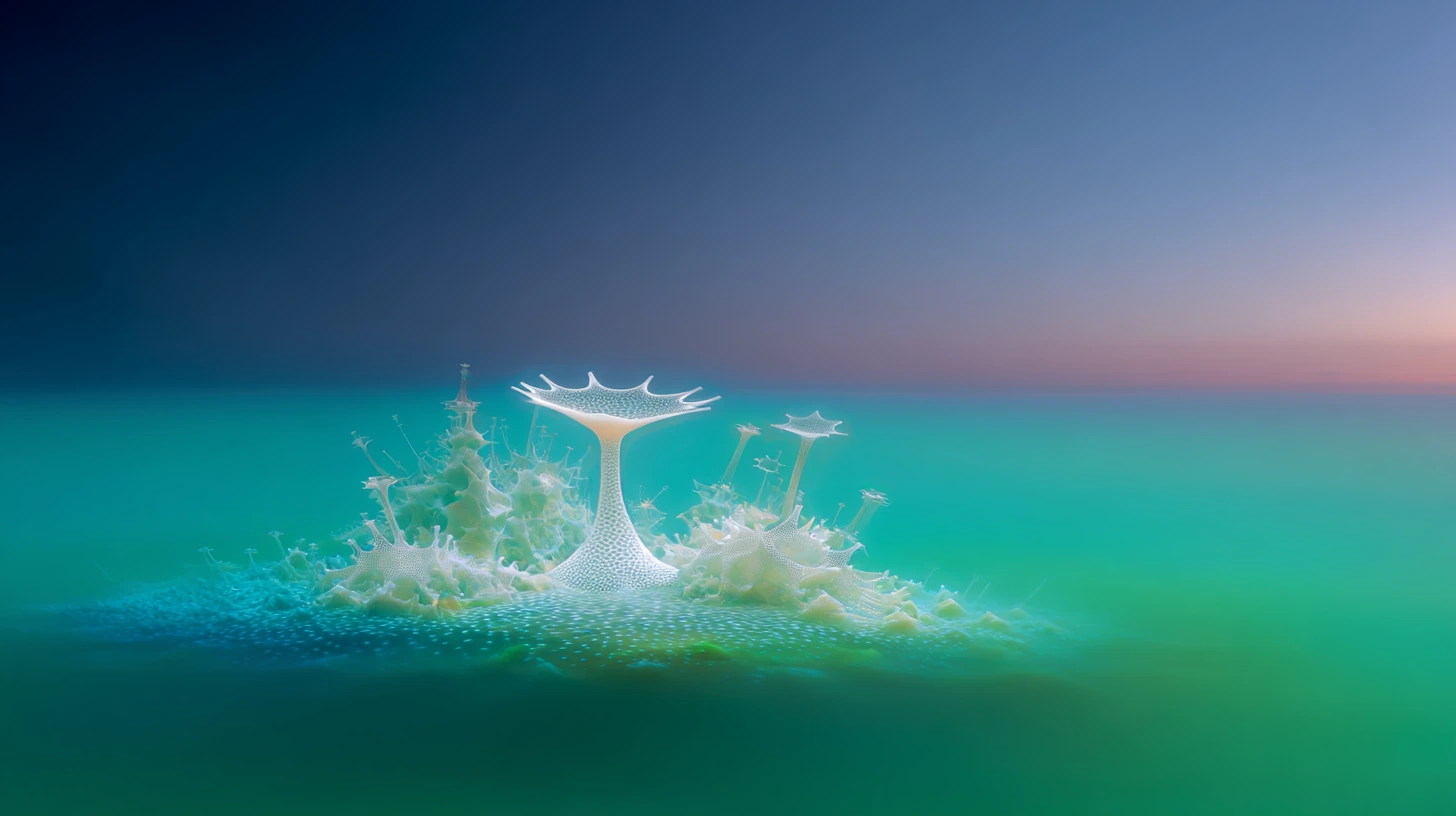
Diatom City Tower
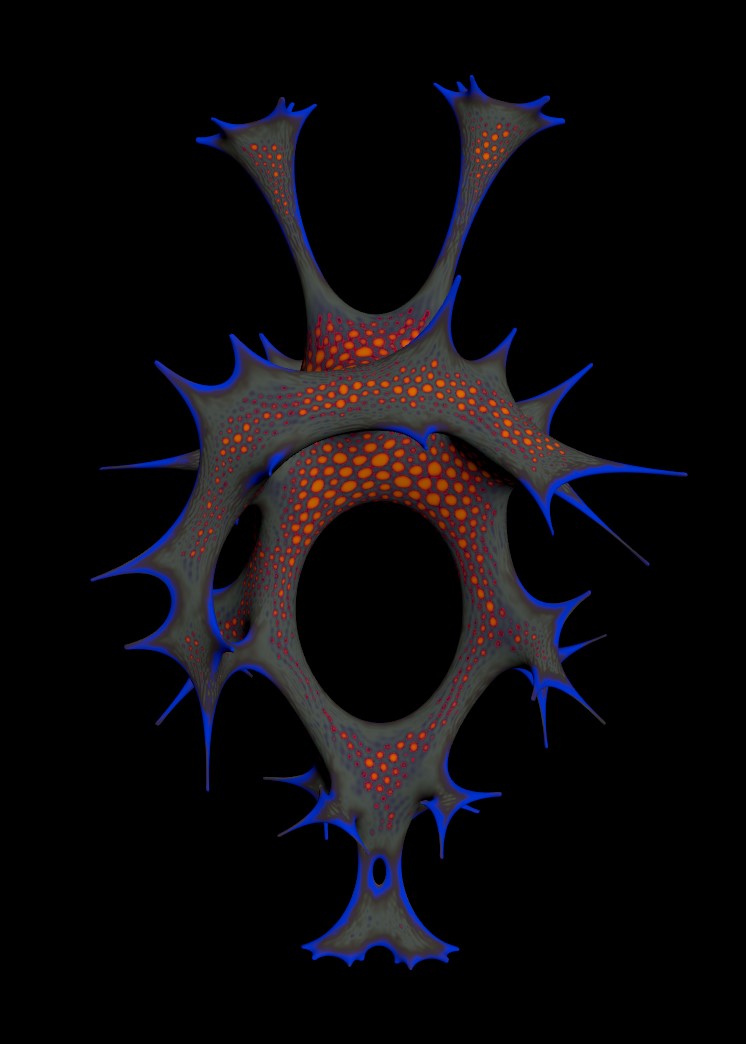
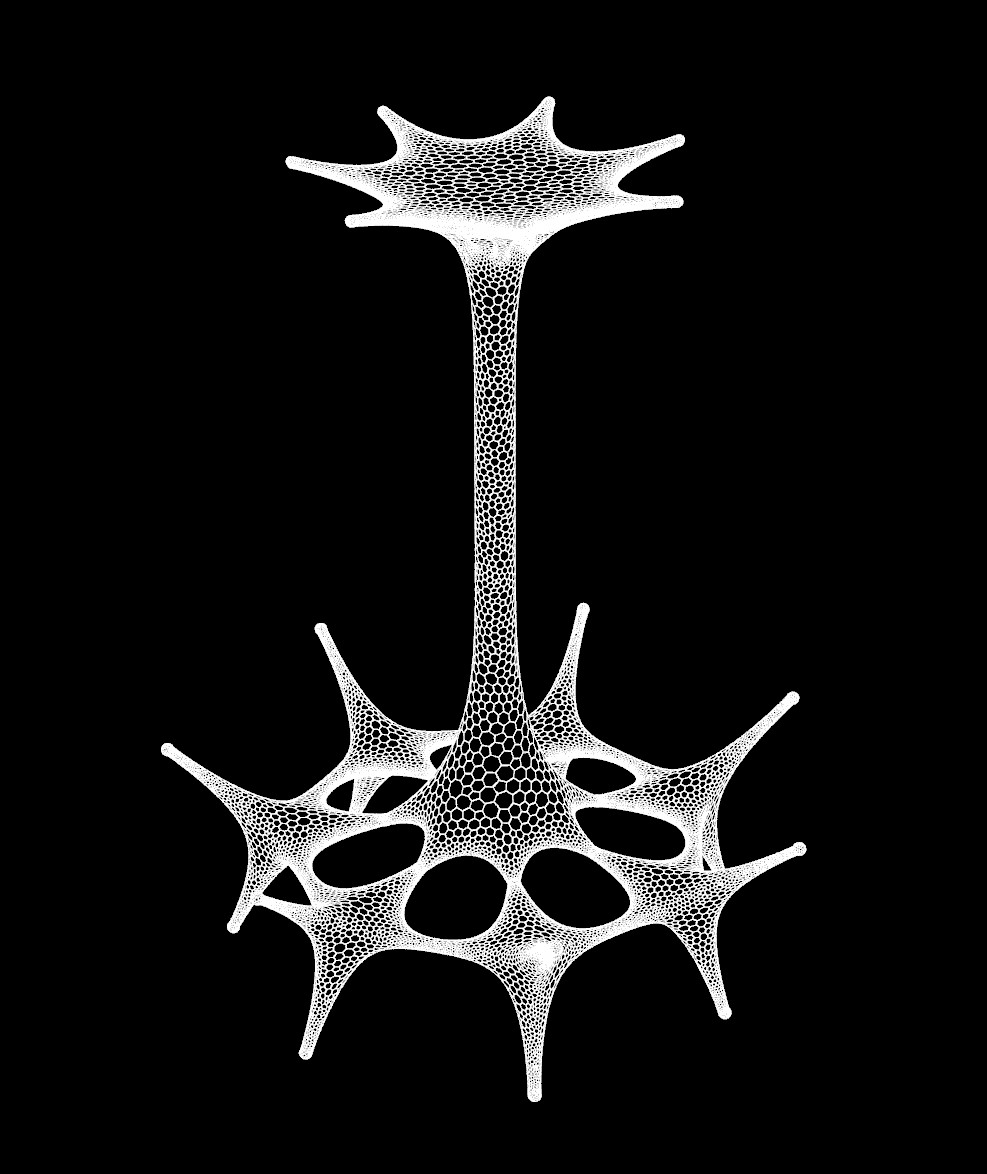
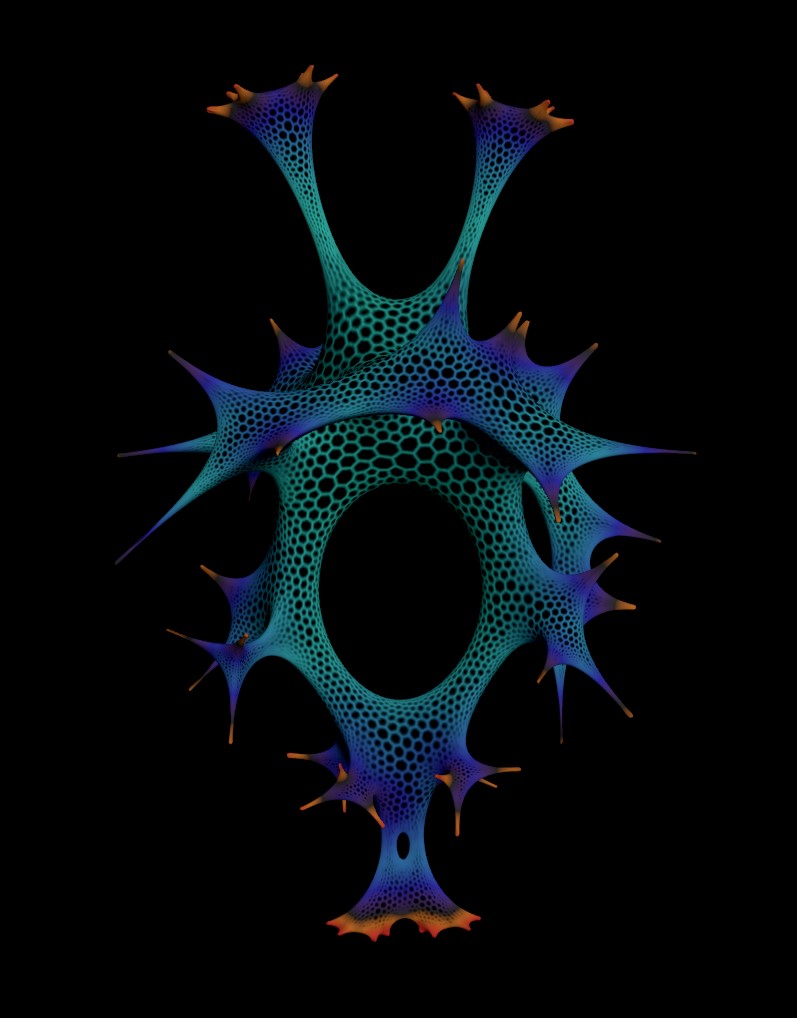
A lattice of arches draws together into a slender stem, then flares at the top into a pointed crown. I arrived at those proportions through a back-and-forth with an AI assistant in Houdini. I could describe the curve I had in mind, watch it take shape, and let what I saw guide the next adjustment.
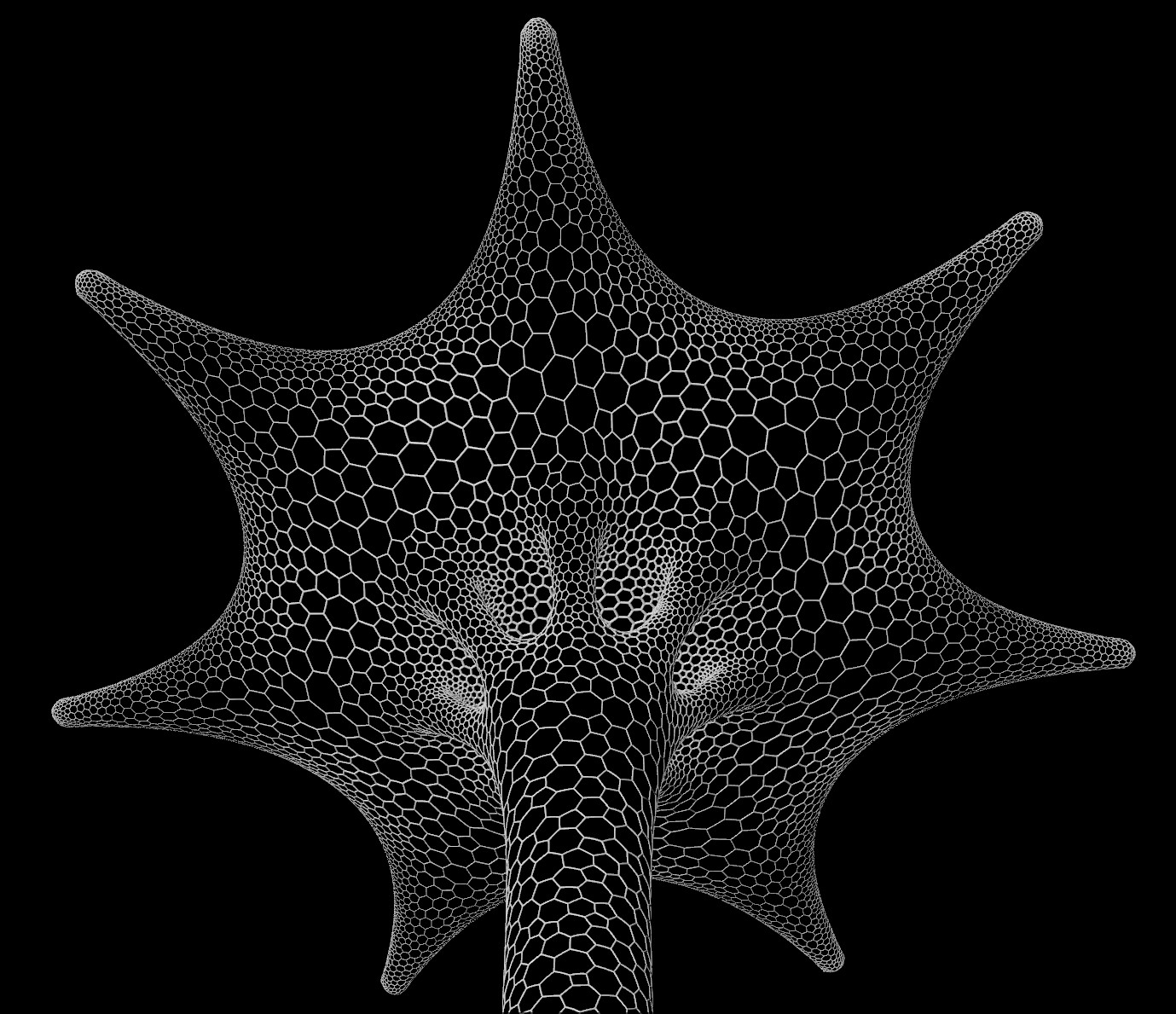
The pattern tightens at the tips of the crown and opens out along the stem. Houdini’s adaptive remesh follows the curvature, and the growth solver inherits that spacing as meshsize, a local target for edge length. As the tower grows, the mesh moves with it. Persistent IDs let me follow the same points and faces from frame to frame. A triangle can divide when it stretches thin or gains enough area, provided its longest edge also exceeds the local limit. The split falls halfway along that edge. Each new face carries its own ID and a record of its parent.
Living, growing forms
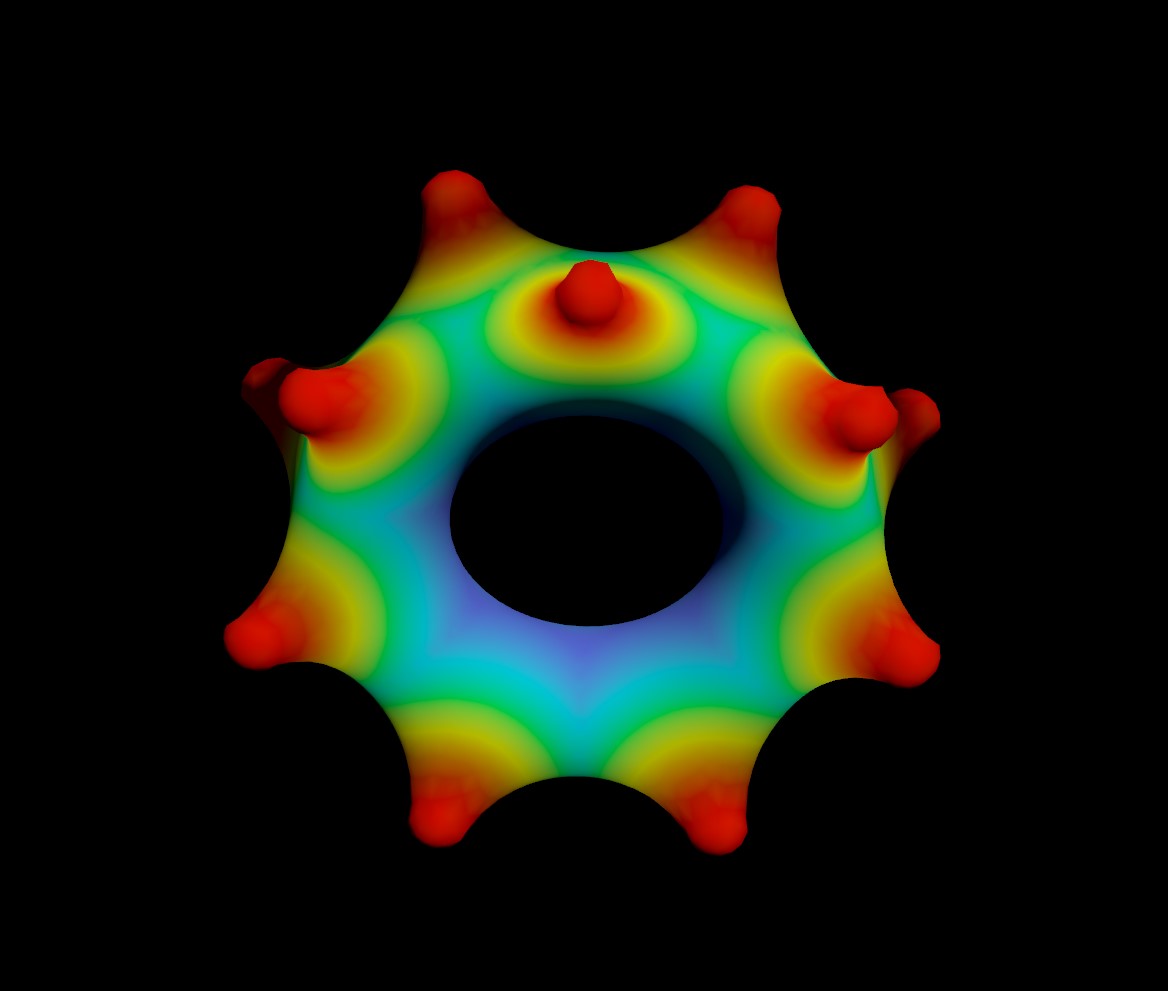
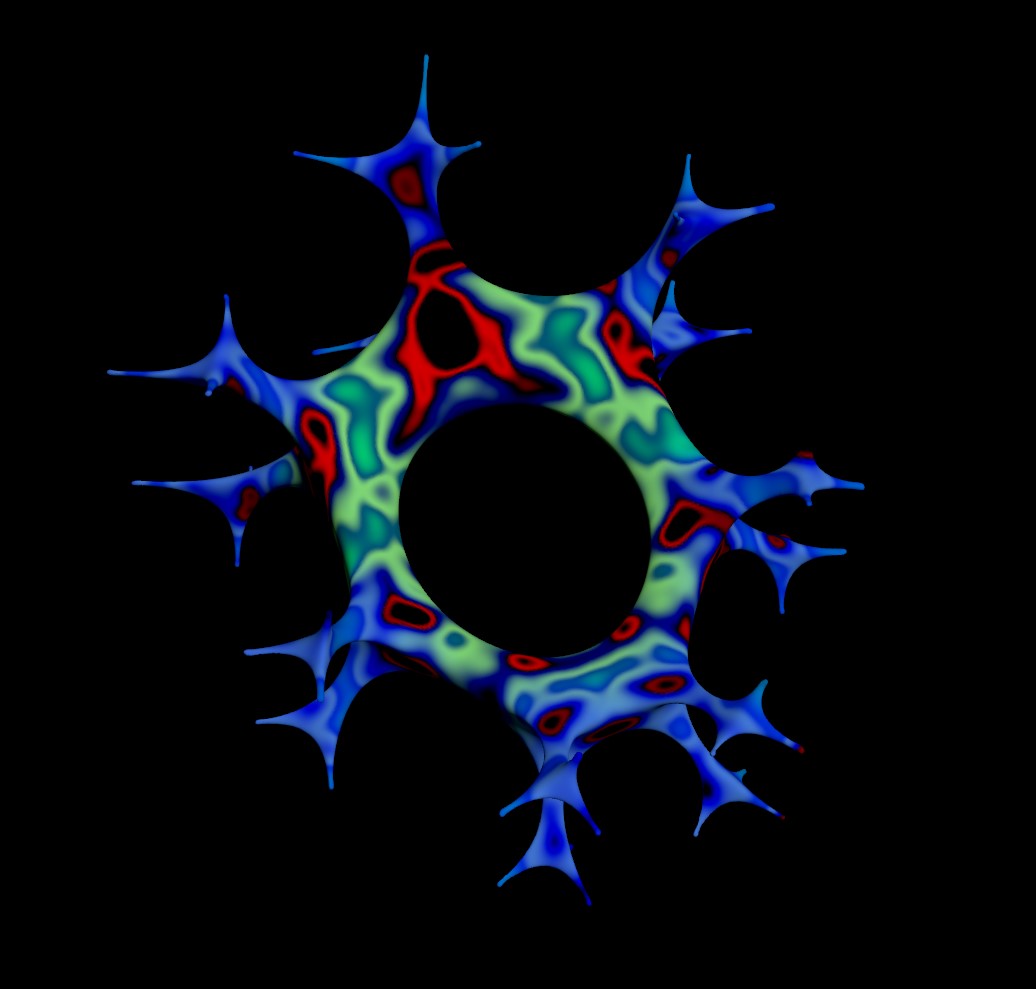
The torus flower begins as a small, round seed. As it swells, its center opens into a ring. Tiny points rise along the curve, then broaden and unfurl into petals.
Simulating the stretch
Dip a bent wire loop in soapy water and the film that spans it settles into a minimal surface. The wire holds the boundary in place. Once the film settles, no small change in its shape can reduce its area. That same idea guides the simulations. The anchors are chosen, and the membrane finds its shape between them.
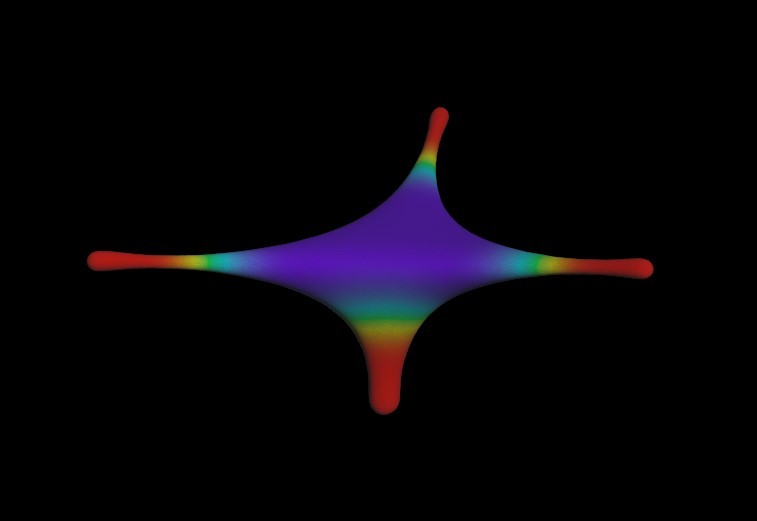
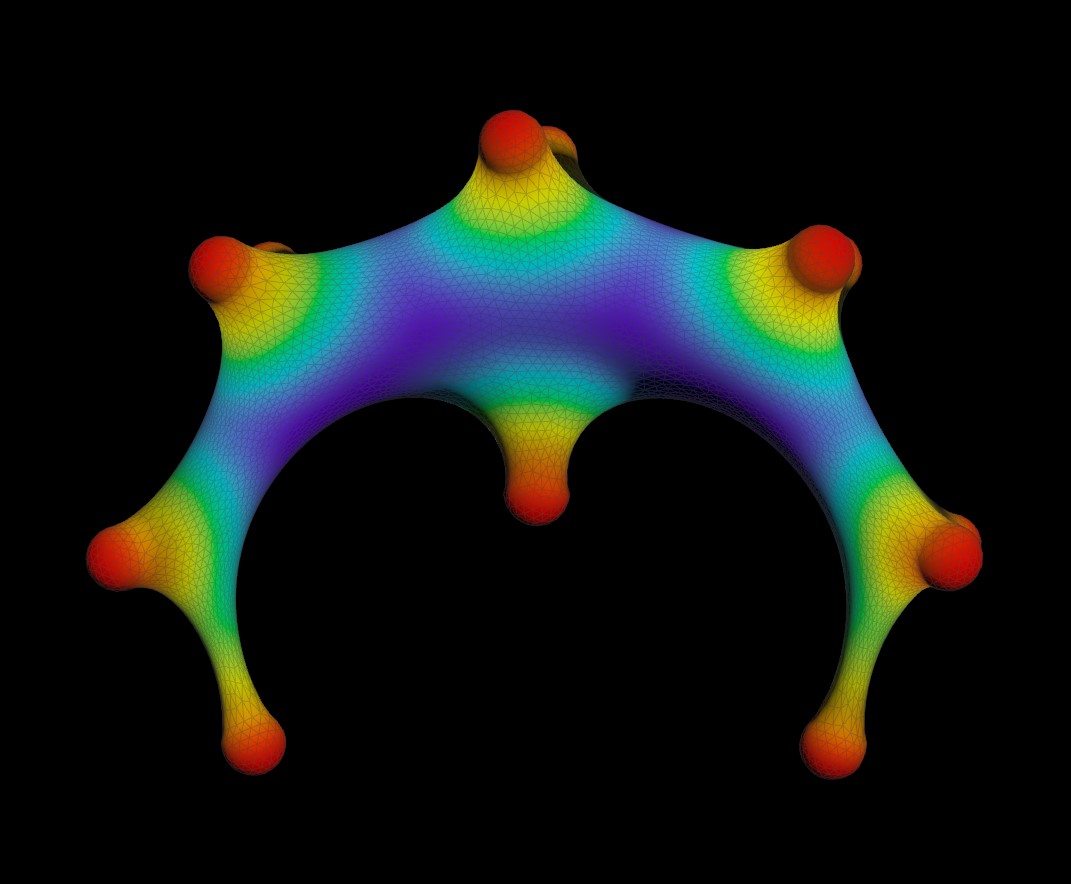
The digital equivalent of a hook is a patch of surface held in place. In one simulation, the edges of the mesh act like springs. Shortening their resting lengths draws the free fabric tight between the anchors. The anchors can move, too. Pulling one outward draws out a tip and changes the curve of the membrane all the way to the next anchor.
Coming soon · Simulation footage
Painting with the surface
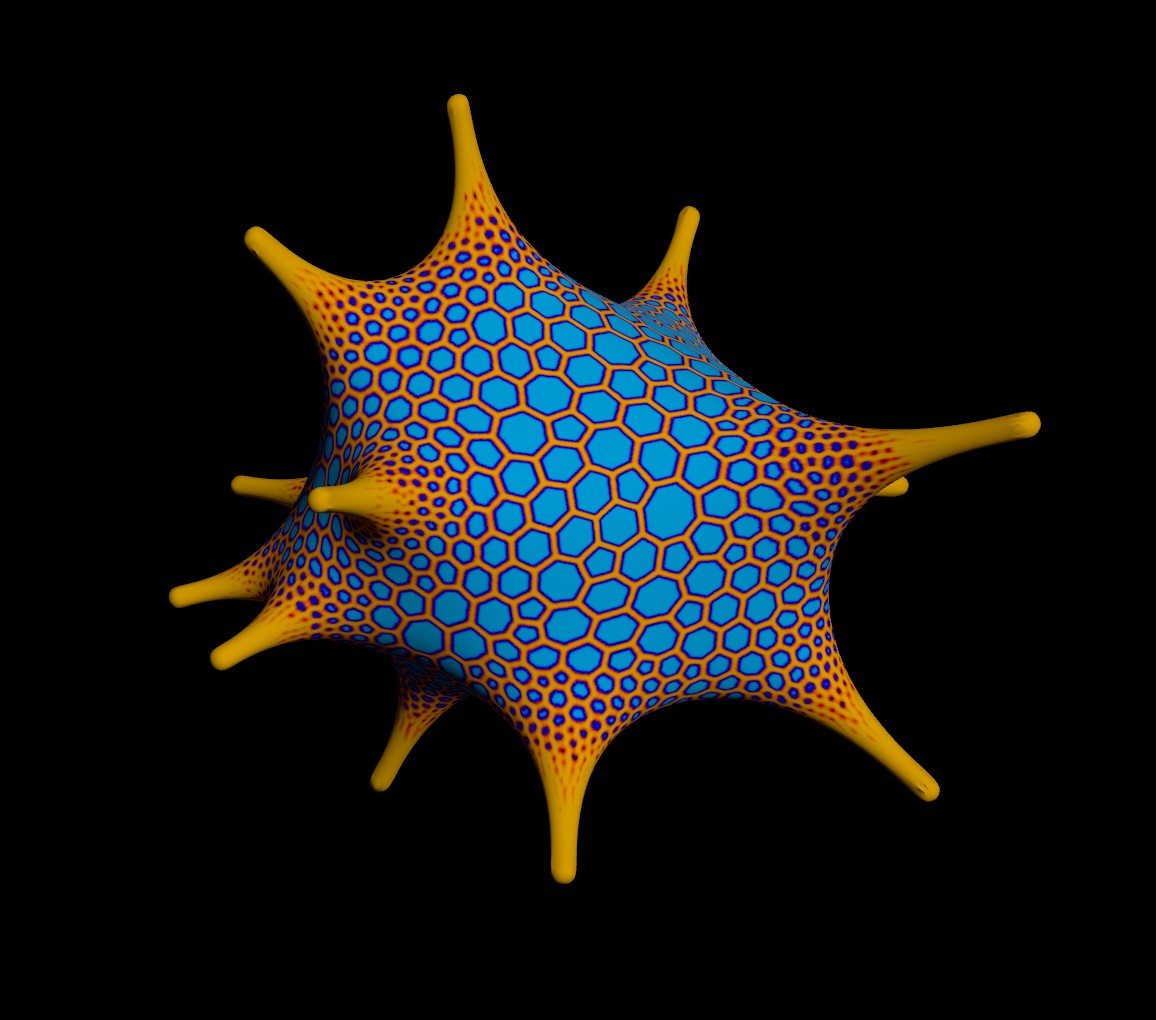
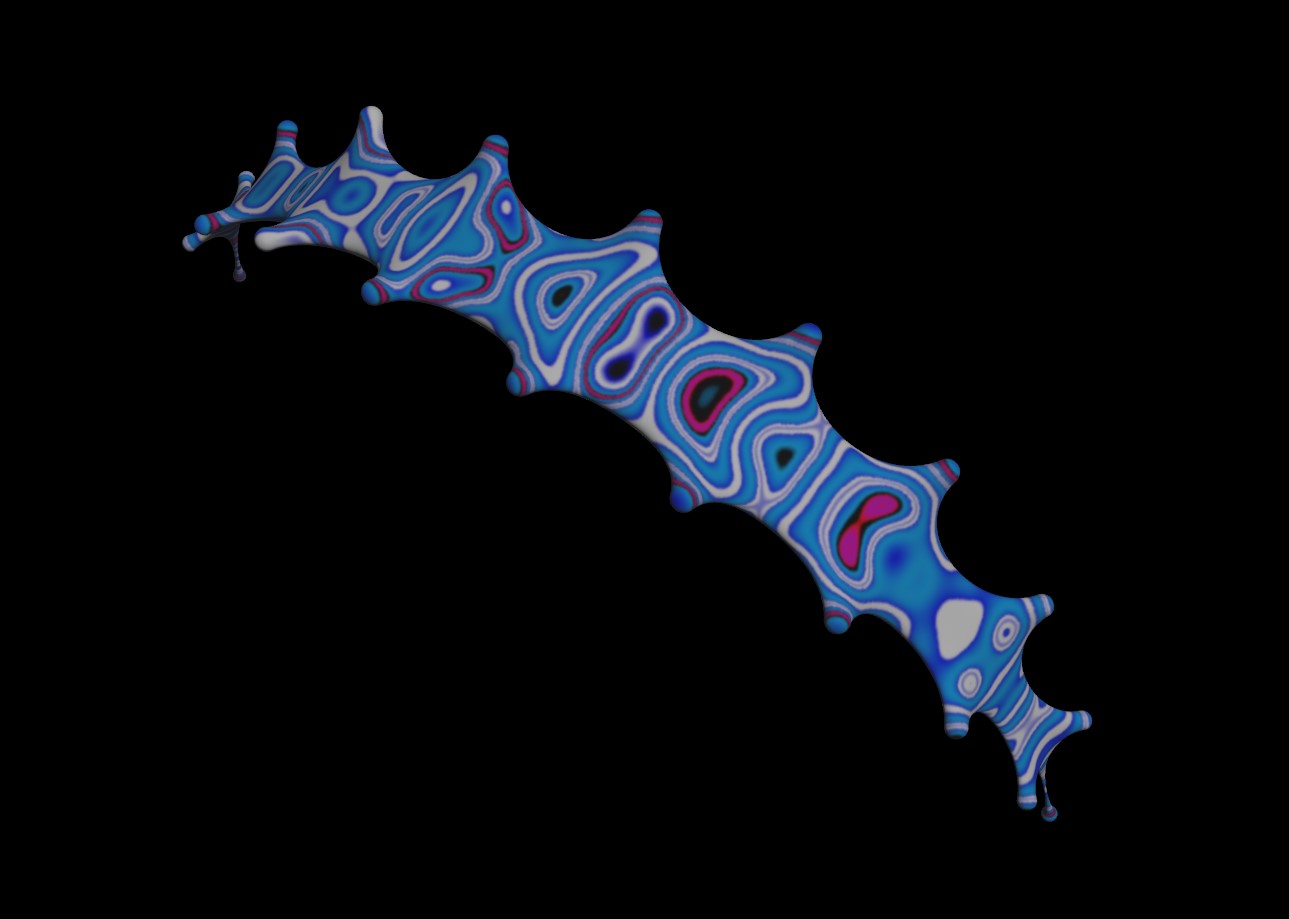
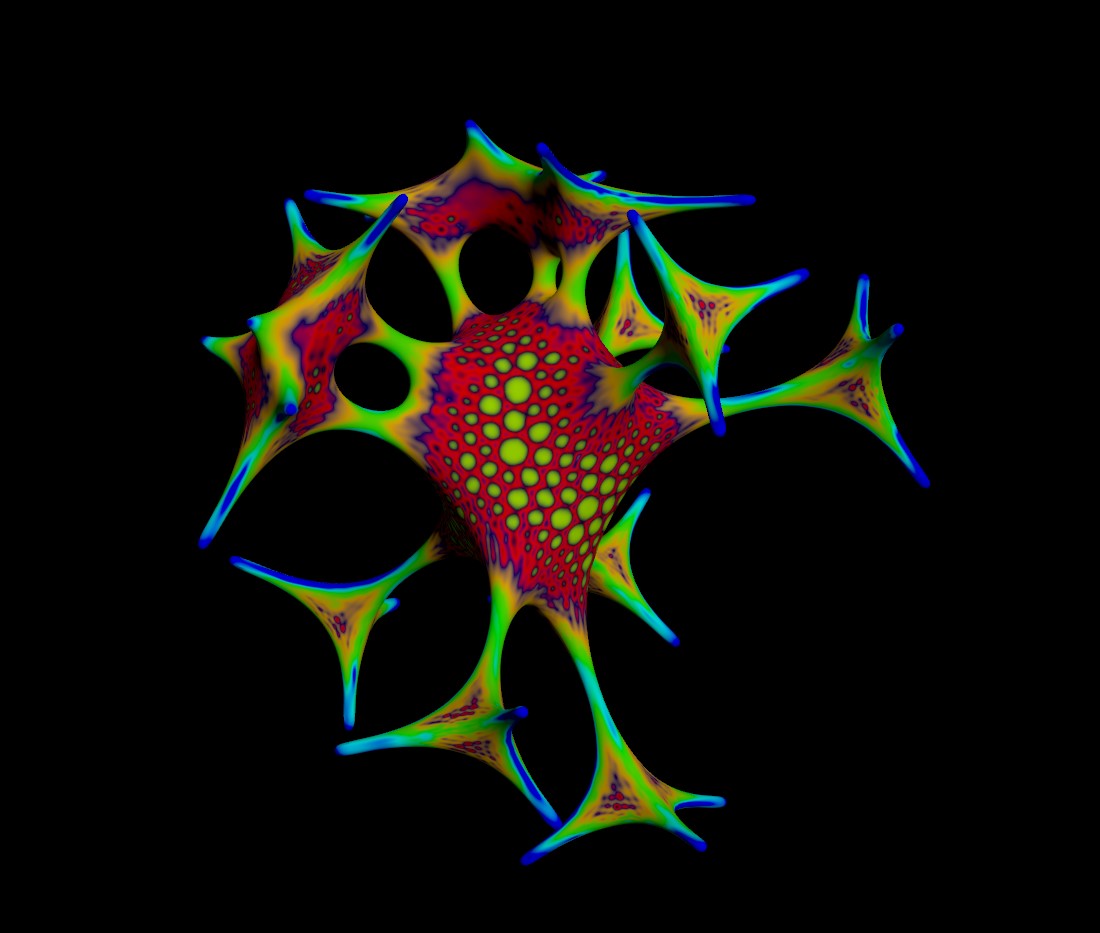
Attributes derived from the qualities of the surface can be used to paint it with color and pattern. On the torus flower, curvedness controls how the color changes from the broad face of a petal to its tightly curved rim. In other studies, I use a gradient around the anchors to build a tangent U vector (tangentu) that gives the noise pattern its direction. I also devised a way to estimate tension from the angles of the triangles in the simulated mesh. Before remeshing, their long, narrow shapes tell me where the membrane appears to pull tight, and I can use that to place color. For the cellular studies, I color the faces and borders of a hexagonal mesh, then transfer the pattern onto a finer version of the surface.
Coming soon · Color and pattern studies